
Your Realistic New York City Wedding Timeline Guide


Every couple planning a wedding in New York City eventually asks us some version of the same question, usually with a little stress in their voice, and it basically comes down to this. How does the night actually flow? There's so much wedding content out there telling you which songs to pick or which flowers to order, but almost nobody breaks down the actual shape of the evening, hour by hour, room by room, so we figured we would just lay it out ourselves, straight from a team of DJs who have worked hundreds of these nights across the boroughs and beyond.
Our whole approach comes down to two things, and we say this a lot because it's true. Customized music. Minimal announcements. Once you understand how a New York City wedding timeline actually moves, you can build a night that feels like the two of you, not a copy of every other wedding you've already been to.
If you want to see a fully traditional reception timeline for comparison, The Knot has a solid hour by hour breakdown, worth a quick skim before you plan your own.
What a Realistic New York City Wedding Timeline Actually Looks Like
A typical NYC wedding day really breaks into five stretches, pre ceremony, ceremony, cocktail hour, dinner and speeches, and dancing, and each one is pretty predictable on its own.
Pre ceremony: guests arrive and settle in
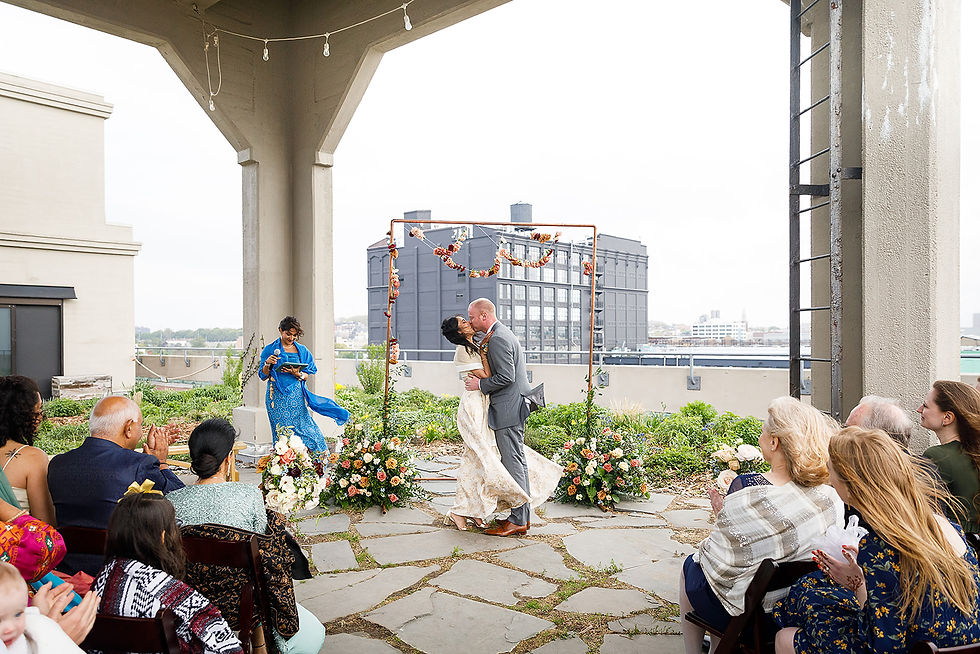
Ceremony: processional, the vows, recessional
Cocktail hour: guests mingle while photos happen
Dinner and speeches: courses come out, toasts happen
Dancing: first dance through last call
Where it gets interesting is what happens between dinner and dancing. That's the real fork in the road, so let's get into it.
How Pre Ceremony and Ceremony Timing Sets the Mood
What Is Actually Happening Before Guests See You
While your guests are finding their seats, there's already music playing in the room, usually something soft and low key, but honestly it doesn't have to fit one genre. Some couples want something quiet and mellow, others want something moodier or more classic, and either one works fine. The whole point is setting a calm tone before things get going.
The Processional and Recessional
Your coordinator or venue person cues the processional, which is the song that plays while you, your partner, and your family walk in, and when the ceremony wraps, the recessional plays while everyone heads back out. These two moments are short, but they're the emotional bookends of your ceremony, so pick something that actually means something to the two of you, not just whatever's trending that season. If you want more on how ceremony music actually gets planned, our FAQ page has you covered.

What Actually Happens During Cocktail Hour
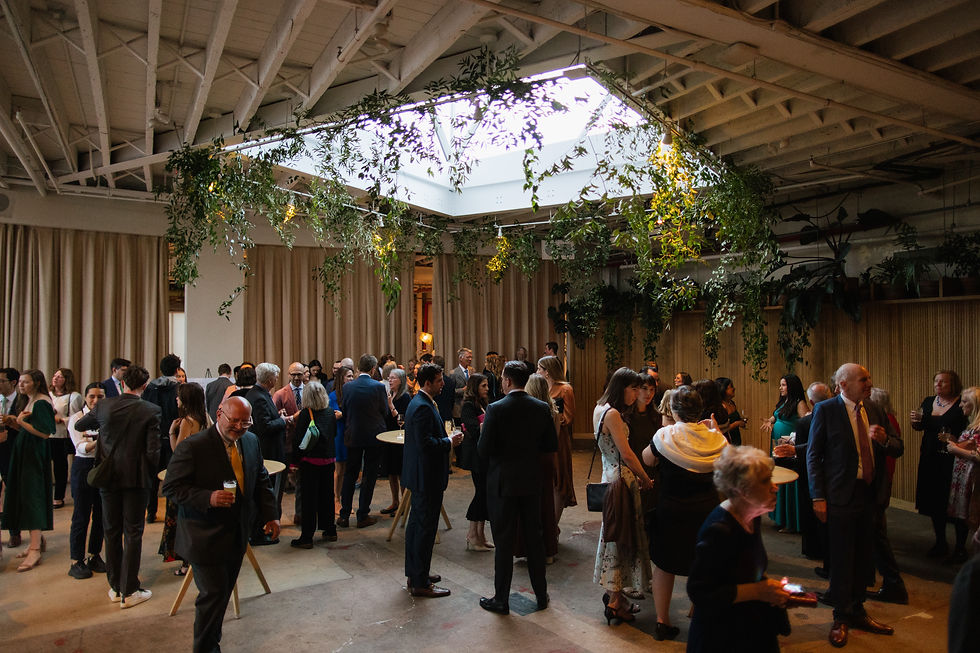
Cocktail hour is honestly the easiest part of the day to plan around, and we mean that. If it's happening in a separate room from your reception, your playlist just keeps running, so there's never a dead moment while guests grab a drink and catch up with people they haven't seen in years. If cocktail hour happens in the same room as your dance floor, which is pretty common at rooftop and loft style venues, your DJ will mix live.
We actually break this exact setup down in our guide to hosting a wedding at The Skylark, one of the Midtown rooftop venues where cocktail hour and the reception share one space, worth a read if that's the kind of venue you're considering.
Decoding the Brooklyn Style vs New Jersey Style Reception Flow
This is the single biggest decision that shapes your entire night, and most couples don't even realize it's a decision until we bring it up on our first call. We're based in New York City, so we see both of these flows constantly, and here's the thing, your venue almost always defaults to one or the other whether you realize it or not.
The New Jersey Style Reception
This is what they do in New Jersey, but also on Long Island, in Westchester County, and honestly at plenty of venues right in the city too. Dancing gets broken up between courses.
You get introduced into the room, do your first dance and maybe a parent dance, then a short dance set, everyone sits down for the first course, and shortly after there's another short dance set, people get up again, then sit back down for the rest of dinner. Once the food service actually winds down, that's when speeches happen. There might be a cake cutting somewhere in there, and then you do one longer dance set, which becomes the real main event of the night. That's what we call the New Jersey style.
The Brooklyn Style Reception
Here, almost all the dancing happens after dinner. You might do an introduction and a first dance right away, but then everyone sits through the whole meal and speeches without any interruptions. If you're doing a cake cutting, that still happens, but all the real dancing gets saved for one long block at the end, so it feels way more like a club and way less like a formal program.
New Jersey Style | Brooklyn Style | |
Dancing | Broken into short sets between courses | Saved for one long block after dinner |
Overall feel | Traditional and structured | Loose, club-like later in the night |
Best fit | Guest lists with a wider age range who like built in breaks | Couples who want an uninterrupted party once dinner ends |
Theoretically you get to pick which one you want, but in practice your venue's usually already doing one or the other, unless you're working with a raw, unstructured space. A lot of the couples we work with have really strong feelings about this one way or the other, so here's a little secret. We work with a lot of Brooklyn leaning couples, so if that's the vibe you're picturing, you're in good company.
Key Questions to Ask Your NYC Venue About Reception Timing
Before you even get anywhere near reception flow, timing actually starts with when you book. Most couples securing a popular loft, historic space, or rooftop in New York City reserve their date 12 to 18 months out, and general planning guidance for New York venues lands in that exact same window, so don't wait around if you've already found the one.
Once you're touring venues, just ask them straight up: Do you default to dancing between courses, or one dance block after dinner?

Keeping Speeches and Announcements Minimal and Seamless
Once the food's fully out and the room settles, that's usually when speeches happen. We keep our part of this really simple. We make the announcements your coordinator actually needs, people being seated, whoever's about to give a toast, a special dance if you're doing one, and that's basically it.
Customized music. Minimal announcements. That's genuinely the whole philosophy. We're not up there hyping up the room or cracking jokes between songs. Nobody has ever left a wedding saying the DJ didn't talk enough.
Designing a Custom Music Flow From First Dance to Last Call
We're not going to hand you a song list, and honestly that's kind of the point. Every couple we work with has completely different taste. Some want a night built around R&B and pop, others want emo and pop punk easing into house later on, and plenty want a little of everything mixed together. What actually matters is that the flow makes sense for your crowd and your night, not that it matches some generic wedding playlist you've already heard a hundred times.
At the end of the night, we announce the last song and the afterparty if you're having one, and after that, we pack up and go, fast. We have teams out within the hour on basically every wedding, and plenty are gone in 20 or 30 minutes. Pretty wild, honestly, but we take real pride in that.
How Much Does a Wedding DJ Cost in New York City
For an experienced, non traditional DJ team in the New York City market, investment generally lands at $2,000 to $4,000, depending on your event length and how much your timeline actually needs on the day. You can see our full services and pricing breakdown here.
Frequently Asked Questions
How far in advance should we secure our venue and key vendors in New York City? Most couples booking popular lofts, historic spaces, or rooftops in New York City reserve their date 12 to 18 months in advance. Locking in your venue first gives you a clear baseline for the rest of your planning and your day of logistics.
What is the difference between a Brooklyn style and a New Jersey style reception? Brooklyn style saves almost all the dancing for one long block after dinner. New Jersey style breaks dancing into shorter sets between courses. Just ask your venue which one they default to before you plan around either.
Can we choose which reception style we want? Technically yes, but most venues already default to one flow or the other unless you're working with a raw, unstructured space. Always confirm with your venue directly rather than assuming.
How do we pick our wedding music without getting overwhelmed? Focus on overall genres, moods, and eras rather than choosing every single track. Whether you love house, classic rock, Latin, pop, or R and B, thinking in terms of atmosphere for each part of the day keeps the music feeling like you without turning into hours of decision making.
How much does a professional wedding DJ cost in New York City? For experienced, non traditional DJ services in the NYC market, investment generally ranges from $2,000 to $4,000 depending on your event length and timeline needs.
Will our DJ make a lot of announcements? Only the ones your coordinator actually needs, being seated, toasts, a special dance if you're having one. Once dancing starts, we go quiet and let the music carry the room.
How long does a typical New York City wedding reception run? Most run five to six hours from cocktail hour through the end of dancing, though it really depends on your venue's end time and your own preferences.
Do we need a wedding coordinator to manage our timeline? It helps a lot, and it is suggested with exceptions. There are a lot of things that happen on the day before and after the wedding. It's helpful to have someone who doesn't only work at the venue and is going to help you with those things, like making sure you don't forget the rings and helping your mom carry a box out at the end of the night. It is also nice to have an advocate during the wedding who does not work at the venue. For instance, if the food has not come out yet, your coordinator can walk into the kitchen and say, "Where is the food?" whereas someone who works at the venue might not do something like that.
Let's Talk
Let's talk about what you're envisioning for the night. Reach out here and we'll take it from there.


Comments